
Community Right to Bid - list of assets of community value

Lotts Meadow - succesfully nominated 2 October 2025

Entry of Lotts Meadow onto Cheltenham Borough Council’s List of Assets of Community Value

1. Background

On 11 September 2025, Cheltenham Borough Council received a nomination under Section 89 of the Localism Act 2011 (“the Act”) to list Lotts Meadow as an Asset of Community Value (“the Asset”). The nomination was made by Leckhampton with Warden Hill Parish Council.

Under Section 87 of the Act the Council must maintain a list of assets of community value. Section 88 of the Act states:

(1)   For the purposes of this Chapter but subject to regulations under subsection (3), a building or other land in a local authority’s area is land of community value if in the opinion of the authority—

(a) an actual current use of the building or other land that is not an ancillary use furthers the social wellbeing or social interests of the local community, and

(b) it is realistic to think that there can continue to be non-ancillary use of the building or other land which will further (whether or not in the same way) the social wellbeing or social interests of the local community.

(2)   For the purposes of this Chapter but subject to regulations under subsection (3), a building or other land in a local authority’s area that is not land of community value as a result of subsection (1) is land of community value if in the opinion of the local authority—

(a) there is a time in the recent past when an actual use of the building or other land that was not an ancillary use furthered the social wellbeing or interests of the local community, and

(b) it is realistic to think that there is a time in the next five years when there could be non-ancillary use of the building or other land that would further (whether or not in the same way as before) the social wellbeing or social interests of the local community.

Under Section 89 of the Act, the Council can only enter assets into the list of Assets of Community Value in response to a nomination from the community.

2. The Decision-Making Process

2.1 Decision-making in response to nominations for entry into the List of Assets of Community Value under the Localism Act 2011 is delegated to the Director of Communities & Economic Development.

2.2 The Director of Communities & Economic Development has now fully considered the nomination and the updated nomination in light of the Act and the Assets of Community Value (England) Regulations 2012 (“the Regulations”).

2.3 Following this consideration, the Director of Communities & Economic Development has decided to include Lotts Meadow on the Council’s list of Assets of Community Value. This decision was made on 2 October 2025.

This decision has been taken because:

(1)

a) The Asset lies within the administrative boundaries of Cheltenham Borough Council;

b) Leckhampton with Warden Hill Parish Council is entitled under 89(2)b)(i) of the Act to make a community nomination in respect of the Asset;

c) The nomination from Leckhampton with Warden Hill Parish Council included the matters required under Regulation 6 of the Regulations;

(d) The Asset does not fall within a description of land which may not be listed as specified in Schedule 1 of the Regulations;

(e) The nomination form from Leckhampton with Warden Hill Parish Council sets out the reasons for nominating the Asset, explaining why the nominator believes the Asset meets the definition in the Act.

(2) In the opinion of the Director of Communities & Economic Development:

(a) The current use of the Asset furthers the social well-being and social interests of the local community, and has done so in the recent past;

(b) The use of the Asset will continue to further the social well-being or interests of the local community;

(c) The use of the asset is not deemed ‘ancillary’, i.e. of secondary purpose.

This means that the use of the asset to further social well-being or interests of the community is a principal use.

3. What Happens Next

The Asset will now be placed on the list of Assets of Community Value which the Council is required to maintain under Section 87 of the Act.

In accordance with Section 91 of the Localism Act, the Council will send this notice to:

  • The owner;
  • The occupier of the asset if not the owner;
  • The successful community nominator of the asset;
  • Any other person(s) specified by the Regulations.

The Council will also inform any freeholders and leaseholders of the asset who are not the owner.

The information will also be published on the Council’s website. The Asset will remain on the Council’s List of Assets of Community Value for a period of five years from the date of this notice unless removed with effect from some earlier time in accordance with the provisions of the regulations.

The Localism Act 2011 requires that the Council draw particular attention to the following:

(a) the consequences for the asset and its owner of the asset’s inclusion in the list; and

(b) the right to ask for review.

The consequences for the asset and its owner of its inclusion in the list

A local land charge under the Local Land Charges Act 1975 will be registered against the Asset to record that it has been included in the Council’s lists of Assets of Community Value.

Where the Asset is registered at the Land Registry, the Council is required under Schedule 4 of the Regulations to apply to the Land Registry for a restriction to be added to the registered title of the land that “no transfer or lease is to be registered without a certificate signed by a conveyancer that the transfer or lease did not contravene Section 95 (1) of the Localism Act 2011”.

Under Section 95 of the Act an owner must notify the Council if they wish to enter into a relevant disposal (as defined in Section 96 of the Act) of the Asset. Owners should contact:

Richard Gibson, Head of communities, wellbeing & partnerships
Cheltenham Borough Council
Municipal Offices
Promenade
Cheltenham
GL50 1PP

Email Richard.Gibson@cheltenham.gov.uk 

Some types of disposal of listed assets are exempt and these are set out in full in Annex A of the document Community Right to Bid: Non-statutory advice note for local authorities.

Annex A also identifies circumstances where, although there is no requirement in the legislation that the owner has to explain to the Council that the disposal is exempt, it would be helpful for them to do so.

Once the Owner notifies the Council of an intended relevant disposal there is a six week period in which a Community Interest Group can ask to be treated as a potential bidder for the Asset. During this interim moratorium period the owner can only sell the Asset to a Community Interest Group.

If a Community Interest Group does make a written request to be treated as a bidder of the Asset there will be a six month moratorium during which the owner can only dispose of the Asset to a Community Interest Group.

The owner is advised to refer to Part 5 Chapter 3 of the Act and the Regulations in full and to seek legal advice if they wish to dispose of the asset. A disposal of listed land which contravenes the Regulations and Act will be ineffective.

After the moratorium period – either the 6 weeks if there has been no community interest, or the full 6 months – the owner is free to sell to whomever they choose and at whatever price, and no further moratorium will apply for the remainder of a protected period lasting 18 months.

All timescales referred to in the last four paragraphs run from receipt by the Council of notification of the Owner’s intention to dispose. The process and lengths of the moratorium periods are contained in section 95 of the Act.

The right to ask for review

Asset owners have the opportunity to request a review of the decision to include the Asset into the Council’s list of Assets of Community Value. Owners wishing to request a review of the decision should do so in writing to:

Director of Governance and Customer Services
Cheltenham Borough Council
Municipal Offices
Promenade
Cheltenham
GL50 1PP

The written request must be made within 8 weeks from the date on the covering letter to this notice and must set out the grounds for review and whether an oral hearing is requested.

The review will normally take place within 8 weeks of the Council having received the written request for review. Private owners may claim compensation for loss and expense incurred through the asset being listed including a claim arising from a period of delay in entering into a binding agreement to sell which is wholly caused by the interim or full moratorium period. Regulation 14 of the Regulations contains more detail on this. Part 5, Chapter 3 of the Localism Act 2011 and the Assets of Community Value (England) Regulations provide further detailed information.

Hardwick Green - successfully nominated 9 July 2025

Entry of Hardwick Green onto Cheltenham Borough Council’s list of Assets of Community Value

1. Background

On 24 April 2025, Cheltenham Borough Council received a nomination under Section 89 of the Localism Act 2011 (“the Act”) to list Hardwick Green, as an Asset of Community Value (“the Asset”). The nomination was made by St Paul's Road Area Residents Association - SPRA.

Under Section 87 of the Act the Council must maintain a list of assets of community value. Section 88 of the Act states:

(1)   For the purposes of this Chapter but subject to regulations under subsection (3), a building or other land in a local authority’s area is land of community value if in the opinion of the authority—

(a) an actual current use of the building or other land that is not an ancillary use furthers the social wellbeing or social interests of the local community, and

(b) it is realistic to think that there can continue to be non-ancillary use of the building or other land which will further (whether or not in the same way) the social wellbeing or social interests of the local community.

(2)   For the purposes of this Chapter but subject to regulations under subsection (3), a building or other land in a local authority’s area that is not land of community value as a result of subsection (1) is land of community value if in the opinion of the local authority—

(a) there is a time in the recent past when an actual use of the building or other land that was not an ancillary use furthered the social wellbeing or interests of the local community, and

(b) it is realistic to think that there is a time in the next five years when there could be non-ancillary use of the building or other land that would further (whether or not in the same way as before) the social wellbeing or social interests of the local community.

Under Section 89 of the Act, the Council can only enter assets into the list of Assets of Community Value in response to a nomination from the community.

2. The decision-making process

2.1 Decision-making in response to nominations for entry into the List of Assets of Community Value under the Localism Act 2011 is delegated to the director of communities and economic development.

2.2 The director of communities and economic development has now fully considered the nomination and the updated nomination in light of the Act and the Assets of Community Value (England) Regulations 2012 (“the Regulations”).

2.3 Following this consideration, the director of communities and economic development has decided to include Hardwick Green on the council’s list of Assets of Community Value.

This decision has been taken because:

(1)

a) The Asset lies within the administrative boundaries of Cheltenham Borough Council;

b) St Paul's Road Area Residents Association - SPRA is entitled under 89(2)b)(i) of the Act to make a community nomination in respect of the Asset;

c) The nomination from St Paul's Road Area Residents Association - SPRA included the matters required under Regulation 6 of the Regulations;

(d) The Asset does not fall within a description of land which may not be listed as specified in Schedule 1 of the Regulations;

(e) The nomination form from St Paul's Road Area Residents Association - SPRA sets out the reasons for nominating the Asset, explaining why the nominator believes the Asset meets the definition in the Act.

(2) In the opinion of the director of communities and economic development:

(a) The current use of the Asset furthers the social well-being, recreational and sporting interests of the local community, and has done so in the recent past;

(b) The use of the Asset will continue to further the social well-being or interests of the local community;

(c) The use of the asset is not deemed ‘ancillary’, i.e. of secondary purpose.

This means that the use of the asset to further social well-being or interests of the community is a principal use.

3. What Happens Next

The Asset will now be placed on the list of Assets of Community Value which the council is required to maintain under Section 87 of the Act.

In accordance with Section 91 of the Localism Act, the council will send this notice to:

  • The owner;
  • The occupier of the asset if not the owner;
  • The successful community nominator of the asset;
  • Any other person(s) specified by the Regulations.

The council will also inform any freeholders and leaseholders of the asset who are not the owner.

The information will also be published on the council’s website. The Asset will remain on the council’s List of Assets of Community Value for a period of five years from the date of this notice unless removed with effect from some earlier time in accordance with the provisions of the regulations.

The Localism Act 2011 requires that the council draw particular attention to the following:

(a) the consequences for the asset and its owner of the asset’s inclusion in the list; and

(b) the right to ask for review.

The consequences for the asset and its owner of its inclusion in the list

A local land charge under the Local Land Charges Act 1975 will be registered against the Asset to record that it has been included in the council’s lists of Assets of Community Value.

Where the Asset is registered at the Land Registry, the council is required under Schedule 4 of the Regulations to apply to the Land Registry for a restriction to be added to the registered title of the land that “no transfer or lease is to be registered without a certificate signed by a conveyancer that the transfer or lease did not contravene Section 95 (1) of the Localism Act 2011”.

Under Section 95 of the Act an owner must notify the council if they wish to enter into a relevant disposal (as defined in Section 96 of the Act) of the Asset. Owners should contact:

Richard Gibson
Head of communities, wellbeing and partnerships
Cheltenham Borough Council
Municipal Offices
Promenade
Cheltenham
GL50 1PP

Email: Richard.gibson@cheltenham.gov.uk

Some types of disposal of listed assets are exempt and these are set out in full in Annex A of the document Community Right to Bid: Non-statutory advice note for local authorities.

Annex A also identifies circumstances where, although there is no requirement in the legislation that the owner has to explain to the council that the disposal is exempt, it would be helpful for them to do so.

Once the Owner notifies the council of an intended relevant disposal there is a six week period in which a Community Interest Group can ask to be treated as a potential bidder for the Asset. During this interim moratorium period the owner can only sell the Asset to a Community Interest Group.

If a Community Interest Group does make a written request to be treated as a bidder of the Asset there will be a six month moratorium during which the owner can only dispose of the Asset to a Community Interest Group.

The owner is advised to refer to Part 5 Chapter 3 of the Act and the Regulations in full and to seek legal advice if they wish to dispose of the asset. A disposal of listed land which contravenes the Regulations and Act will be ineffective.

After the moratorium period – either the six weeks if there has been no community interest, or the full 6 months – the owner is free to sell to whomever they choose and at whatever price, and no further moratorium will apply for the remainder of a protected period lasting 18 months.

All timescales referred to in the last four paragraphs run from receipt by the Council of notification of the Owner’s intention to dispose. The process and lengths of the moratorium periods are contained in section 95 of the Act.

The right to ask for review

Asset owners have the opportunity to request a review of the decision to include the Asset into the council’s list of Assets of Community Value. Owners wishing to request a review of the decision should do so in writing to:

Director of governance and customer services
Cheltenham Borough Council
Municipal Offices
Promenade
Cheltenham
GL50 1PP

The written request must be made within eight weeks from the date on the covering letter to this notice and must set out the grounds for review and whether an oral hearing is requested.

The review will normally take place within eight weeks of the Council having received the written request for review. Private owners may claim compensation for loss and expense incurred through the asset being listed including a claim arising from a period of delay in entering into a binding agreement to sell which is wholly caused by the interim or full moratorium period. Regulation 14 of the Regulations contains more detail on this. Part 5, Chapter 3 of the Localism Act 2011 and the Assets of Community Value (England) Regulations provide further detailed information.
If you have any queries about this notice please contact:

Richard Gibson
Head of communities, wellbeing and partnerships
Cheltenham Borough Council
Municipal Offices
Promenade
Cheltenham
GL50 1PP

Email: Richard.gibson@cheltenham.gov.uk

Daisybank Field - succesfully nominated 7 March 2025

Notice under section 91 of the Localism Act: Entry of Daisybank Field (Land that lies to the south of Pilford Road and lies to the west of Sandy Lane, Cheltenham), onto Cheltenham Borough Council’s list of Assets of Community Value

1. Background

On 7 February 2025, Cheltenham Borough Council received a nomination under Section 89 of the Localism Act 2011 (“the Act”) to list Daisybank Field (Land lying to the south of Pilford Road and land lying to the west of Sandy Lane, Cheltenham), as an Asset of Community Value (“the Asset”). The nomination was made by Leckhampton with Warden Hill Parish Council.

Under Section 87 of the Act the Council must maintain a list of assets of community value. Section 88 of the Act states:

(1) For the purposes of this Chapter but subject to regulations under subsection (3), a building or other land in a local authority’s area is land of community value if in the opinion of the authority—
(a) an actual current use of the building or other land that is not an ancillary use furthers the social wellbeing or social interests of the local community, and
(b) it is realistic to think that there can continue to be non-ancillary use of the building or other land which will further (whether or not in the same way) the social wellbeing or social interests of the local community.

(2) For the purposes of this Chapter but subject to regulations under subsection (3), a building or other land in a local authority’s area that is not land of community value as a result of subsection (1) is land of community value if in the opinion of the local authority—
(a) there is a time in the recent past when an actual use of the building or other land that was not an ancillary use furthered the social wellbeing or interests of the local community, and
(b) it is realistic to think that there is a time in the next five years when there could be non-ancillary use of the building or other land that would further (whether or not in the same way as before) the social wellbeing or social interests of the local community.

Under Section 89 of the Act, the Council can only enter assets into the list of Assets of Community Value in response to a nomination from the community.

2. The decision-making process

2.1 Decision-making in response to nominations for entry into the list of Assets of Community Value under the Localism Act 2011 is delegated to the director of communities and economic development.

2.2 The director of communities and economic development has now fully considered the nomination and the updated nomination in light of the Act and the Assets of Community Value (England) Regulations 2012 (“the Regulations”). 

2.3 Following this consideration, the director of communities and economic development has decided to include Daisybank Field on the council’s list of Assets of Community Value.

This decision has been taken because:
(1)
(a) The Asset lies within the administrative boundaries of Cheltenham Borough Council;
(b) Leckhampton with Warden Hill Parish Council is entitled under 89(2)b)(i) of the Act to make a community nomination in respect of the Asset;
(c) The nomination from Leckhampton with Warden Hill Parish Council included the matters required under Regulation 6 of the Regulations;
(d) The Asset does not fall within a description of land which may not be listed as specified in Schedule 1 of the Regulations;
(e) The nomination form from Leckhampton with Warden Hill Parish Council sets out the reasons for nominating the Asset, explaining why the nominator believes the Asset meets the definition in the Act. 

(2) In the opinion of the director of communities and economic development:
(a) The current use of the Asset furthers the social well-being, recreational and sporting interests of the local community, and has done so in the recent past;
(b) The use of the Asset will continue to further the social well-being or interests of the local community;
(c) The use of the asset is not deemed ‘ancillary’, i.e. of secondary purpose.

This means that the use of the asset to further social well-being or interests of the community is a principal use.

3. What happens next

The Asset will now be placed on the list of Assets of Community Value which the Council is required to maintain under Section 87 of the Act.

In accordance with Section 91 of the Localism Act, the council will send this notice to:

  • The owner;
  • The occupier of the asset if not the owner;
  • The successful community nominator of the asset;
  • Any other person(s) specified by the regulations.

The council will also inform any freeholders and leaseholders of the asset who are not the owner.

The information will also be published on the council’s website. The Asset will remain on the council’s list of Assets of Community Value for a period of five years from the date of this notice unless removed with effect from some earlier time in accordance with the provisions of the regulations.

The Localism Act 2011 requires that the council draw particular attention to the following:

(a) the consequences for the asset and its owner of the asset’s inclusion in the list; and 
(b) the right to ask for review.

The consequences for the asset and its owner of its inclusion in the list

A local land charge under the Local Land Charges Act 1975 will be registered against the Asset to record that it has been included in the council’s lists of Assets of Community Value. 

Where the Asset is registered at the Land Registry, the council is required under Schedule 4 of the Regulations to apply to the Land Registry for a restriction to be added to the registered title of the land that “no transfer or lease is to be registered without a certificate signed by a conveyancer that the transfer or lease did not contravene Section 95 (1) of the Localism Act 2011”.

Under Section 95 of the Act an owner must notify the council if they wish to enter into a relevant disposal (as defined in Section 96 of the Act) of the Asset. Owners should contact: 

Richard Gibson
Head of communities, wellbeing and partnerships
Cheltenham Borough Council
Municipal Offices
Promenade
Cheltenham
GL50 1PP

Some types of disposal of listed assets are exempt and these are set out in full in Annex A of the document Community Right to Bid: Non-statutory advice note for local authorities.

Annex A also identifies circumstances where, although there is no requirement in the legislation that the owner has to explain to the council that the disposal is exempt, it would be helpful for them to do so.

Once the owner notifies the council of an intended relevant disposal there is a six week period in which a Community Interest Group can ask to be treated as a potential bidder for the Asset. During this interim moratorium period the owner can only sell the Asset to a Community Interest Group.

If a Community Interest Group does make a written request to be treated as a bidder of the Asset there will be a six month moratorium during which the owner can only dispose of the Asset to a Community Interest Group. 

The owner is advised to refer to Part 5 Chapter 3 of the Act and the Regulations in full and to seek legal advice if they wish to dispose of the asset. A disposal of listed land which contravenes the Regulations and Act will be ineffective.

After the moratorium period – either the six weeks if there has been no community interest, or the full 6 months – the owner is free to sell to whomever they choose and at whatever price, and no further moratorium will apply for the remainder of a protected period lasting 18 months. 

All timescales referred to in the last four paragraphs run from receipt by the council of notification of the owner’s intention to dispose. The process and lengths of the moratorium periods are contained in section 95 of the Act.

The right to ask for review

Asset owners have the opportunity to request a review of the decision to include the asset into the council’s list of Assets of Community Value. Owners wishing to request a review of the decision should do so in writing to:

Director of governance and customer services
Cheltenham Borough Council
Municipal Offices
Promenade
Cheltenham
GL50 1PP

The written request must be made within eight weeks from the date on the covering letter to this notice and must set out the grounds for review and whether an oral hearing is requested. 

The review will normally take place within eight weeks of the council having received the written request for review. Private owners may claim compensation for loss and expense incurred through the asset being listed including a claim arising from a period of delay in entering into a binding agreement to sell which is wholly caused by the interim or full moratorium period. Regulation 14 of the Regulations contains more detail on this. Part 5, Chapter 3 of the Localism Act 2011 and the Assets of Community Value (England) Regulations provide further detailed information.

The Bell Inn - successfully nominated on 28 February 2025

Notice under section 91 of the Localism Act: Entry of The Bell Inn, 70 Bath Road, Cheltenham, GL53 7JT, onto Cheltenham Borough Council’s List of Assets of Community Value

1. Background

On 6 January 2025, Cheltenham Borough Council received a nomination under Section 89 of the Localism Act 2011 (“the Act”) to list The Bell Inn, 70 Bath Road, Cheltenham, GL53 7JT as an Asset of Community Value (“the Asset”). The nomination was made by a group of local residents.

Under Section 87 of the Act the Council must maintain a list of assets of community value. Section 88 of the Act states:

(1)   For the purposes of this Chapter but subject to regulations under subsection (3), a building or other land in a local authority’s area is land of community value if in the opinion of the authority—

(a) an actual current use of the building or other land that is not an ancillary use furthers the social wellbeing or social interests of the local community, and

(b) it is realistic to think that there can continue to be non-ancillary use of the building or other land which will further (whether or not in the same way) the social wellbeing or social interests of the local community.

(2)   For the purposes of this Chapter but subject to regulations under subsection (3), a building or other land in a local authority’s area that is not land of community value as a result of subsection (1) is land of community value if in the opinion of the local authority—

(a) there is a time in the recent past when an actual use of the building or other land that was not an ancillary use furthered the social wellbeing or interests of the local community, and

(b) it is realistic to think that there is a time in the next five years when there could be non-ancillary use of the building or other land that would further (whether or not in the same way as before) the social wellbeing or social interests of the local community.

Under Section 89 of the Act, the Council can only enter assets into the list of Assets of Community Value in response to a nomination from the community.

2. The Decision-Making Process

2.1 Decision-making in response to nominations for entry into the List of Assets of Community Value under the Localism Act 2011 is delegated to the Director of Communities & Economic Development.

2.2 The Director of Communities & Economic Development has now fully considered the nomination and the updated nomination in light of the Act and the Assets of Community Value (England) Regulations 2012 (“the Regulations”).

2.3 Following this consideration, the Director of Communities & Economic Development has decided to include The Bell Inn on the Council’s list of Assets of Community Value.

This decision has been taken because:

(1)

a) The Asset lies within the administrative boundaries of Cheltenham Borough Council;

b) The group of local residents is entitled under 89(2)b)(i) of the Act to make a community nomination in respect of the Asset;

c) The nomination from the group of local residents included the matters required under Regulation 6 of the Regulations;

(d) The Asset does not fall within a description of land which may not be listed as specified in Schedule 1 of the Regulations;

(e) The letter of nomination from the group of local residents sets out the reasons for nominating the Asset, explaining why the nominator believes the Asset meets the definition in the Act.

(2) In the opinion of the Director of Communities & Economic Development:

(a) The current use of the Asset furthers the social well-being or cultural, recreational or sporting interests of the local community, or has done so in the recent past;

(b) The use of the Asset could continue to further the social well-being or interests of the local community;

(c) The use of the asset is not deemed ‘ancillary’, i.e. of secondary purpose.

This means that the use of the asset to further social well-being or interests of the community is a principal use.

3. What Happens Next

The Asset will now be placed on the list of Assets of Community Value which the Council is required to maintain under Section 87 of the Act.

In accordance with Section 91 of the Localism Act, the Council will send this notice to:

  • The owner;
  • The occupier of the asset if not the owner;
  • The successful community nominator of the asset;
  • Any other person(s) specified by the Regulations.

The Council will also inform any freeholders and leaseholders of the asset who are not the owners, together with the parish council the land lies in (or partly lies in).

The information will also be published on the Council’s website. The Asset will remain on the Council’s List of Assets of Community Value for a period of five years from the date of this notice unless removed with effect from some earlier time in accordance with the provisions of the regulations.

The Localism Act 2011 requires that the Council draw particular attention to the following:

(a) the consequences for the asset and its owner of the asset’s inclusion in the list; and

(b) the right to ask for review.

The consequences for the asset and its owner of its inclusion in the list

A local land charge under the Local Land Charges Act 1975 will be registered against the Asset to record that it has been included in the Council’s lists of Assets of Community Value.

Where the Asset is registered at the Land Registry, the Council is required under Schedule 4 of the Regulations to apply to the Land Registry for a restriction to be added to the registered title of the land that “no transfer or lease is to be registered without a certificate signed by a conveyancer that the transfer or lease did not contravene Section 95 (1) of the Localism Act 2011”.

Under Section 95 of the Act an owner must notify the Council if they wish to enter into a relevant disposal (as defined in Section 96 of the Act) of the Asset. Owners should contact:

Richard Gibson
Head of communities, wellbeing and partnerships
Cheltenham Borough Council
Municipal Offices
Promenade
Cheltenham
GL50 1PP

Some types of disposal of listed assets are exempt and these are set out in full in Annex A of the document Community Right to Bid: Non-statutory advice note for local authorities.

Annex A also identifies circumstances where, although there is no requirement in the legislation that the owner has to explain to the Council that the disposal is exempt, it would be helpful for them to do so.

Once the Owner notifies the Council of an intended relevant disposal there is a six week period in which a Community Interest Group can ask to be treated as a potential bidder for the Asset. During this interim moratorium period the owner can only sell the Asset to a Community Interest Group.

If a Community Interest Group does make a written request to be treated as a bidder of the Asset there will be a six month moratorium during which the owner can only dispose of the Asset to a Community Interest Group.

The owner is advised to refer to Part 5 Chapter 3 of the Act and the Regulations in full and to seek legal advice if they wish to dispose of the asset. A disposal of listed land which contravenes the Regulations and Act will be ineffective.

After the moratorium period – either the 6 weeks if there has been no community interest, or the full 6 months – the owner is free to sell to whomever they choose and at whatever price, and no further moratorium will apply for the remainder of a protected period lasting 18 months.

All timescales referred to in the last four paragraphs run from receipt by the Council of notification of the Owner’s intention to dispose. The process and lengths of the moratorium periods are contained in section 95 of the Act.

The right to ask for review

Asset owners have the opportunity to request a review of the decision to include the Asset into the Council’s list of Assets of Community Value. Owners wishing to request a review of the decision should do so in writing to:

Director of governance and customer services
Cheltenham Borough Council
Municipal Offices
Promenade
Cheltenham
GL50 1PP

The written request must be made within eight weeks from the date on the covering letter to this notice and must set out the grounds for review and whether an oral hearing is requested.

The review will normally take place within eight weeks of the Council having received the written request for review. Private owners may claim compensation for loss and expense incurred through the asset being listed including a claim arising from a period of delay in entering into a binding agreement to sell which is wholly caused by the interim or full moratorium period. Regulation 14 of the Regulations contains more detail on this. Part 5, Chapter 3 of the Localism Act 2011 and the Assets of Community Value (England) Regulations provide further detailed information.

Southcourt Green - successfully nominated on 6 September 2023

Notice under section 91 of the Localism Act: Entry of Land on the east side of Southcourt Drive, Cheltenham aka Southcourt Green into Cheltenham Borough Council’s List of Assets of Community Value

1. Background

In August 2023, Cheltenham Borough Council received a nomination form to list the green space known as Southcourt Green as an asset of community value. The nomination was submitted by The Southcourt Residents Group.

Under Section 87 of the Act the Council must maintain a list of assets of community value. Section 88 of the Act states:

(1)   For the purposes of this Chapter but subject to regulations under subsection (3), a building or other land in a local authority’s area is land of community value if in the opinion of the authority—

(a) an actual current use of the building or other land that is not an ancillary use furthers the social wellbeing or social interests of the local community, and

(b) it is realistic to think that there can continue to be non-ancillary use of the building or other land which will further (whether or not in the same way) the social wellbeing or social interests of the local community.

(2)   For the purposes of this Chapter but subject to regulations under subsection (3), a building or other land in a local authority’s area that is not land of community value as a result of subsection (1) is land of community value if in the opinion of the local authority—

(a) there is a time in the recent past when an actual use of the building or other land that was not an ancillary use furthered the social wellbeing or interests of the local community, and

(b) it is realistic to think that there is a time in the next five years when there could be non-ancillary use of the building or other land that would further (whether or not in the same way as before) the social wellbeing or social interests of the local community.

Under Section 89 of the Act, the council can only enter assets into the list of Assets of Community Value in response to nomination from the community.

2. The Decision-Making Process

2.1 Decision-making in response to nominations for entry into the List of Assets of Community Value under the Localism Act 2011 is delegated to the Executive Director Place and Communities.

2.2 The internal review process in relation to listing shall be undertaken by the Executive Director of Finance and Assets, who was not involved in the initial decision.

2.3 The Executive Director Place and Communities has now fully considered the nomination in light of the Act and the Assets of Community Value (England) Regulations 2012 (“the Regulations”). Following this consideration, the Executive Director Place and Communities decided to include the green space known as Southcourt Green in its list of Assets of Community Value.

This decision has been taken because:

(1)

a) The Asset lies within the administrative boundaries of Cheltenham Borough Council

b) The Southcourt Residents Group is entitled under 89(2)b)(i) of the Act to make a community nomination in respect of the Asset

c) The nomination from The Southcourt Residents Group includes the matters required under Regulation 6 of the Regulations

(d) The Asset does not fall within a description of land which may not be listed as specified in Schedule 1 of the Regulations

(e) The letter of nomination from The Southcourt Residents Group sets out the reasons for nominating the Asset, explaining why the nominator believes the Asset meets the definition in the Act and

(2) in the opinion of the Council,

(a) The current use of the Asset furthers the social well-being or cultural, recreational or sporting interests of the local community

(b) The use of the land or building currently, or in the recent past, furthers the social well-being or cultural, recreational or sporting interests of the local community.

(c) The use of the Asset will continue to further the social well-being or interests of the local community.

(d) The use of the building or land is not deemed ‘ancillary’, i.e. of secondary purpose.

This means that the use of the land or building to further social well-being or interests of the community is a principal use.

3. What happens next

The Asset will now be placed on the list of Assets of Community Value which the council is required to maintain under Section 87 of the Act.

In accordance with Section 91 of the Localism Act, the council will send this notice to:

  • The owner,
  • The occupier of the land if not the owner,
  • The successful community nominator of the asset.
  • Any other person(s) specified by the Regulations

The council will also inform any freeholders and leaseholders of the asset who are not the owners, together with the parish council the land lies in (or partly lies in).

The information will also be published on the council’s website. The Asset will remain on the council’s list of Assets of Community Value for a period of five years from the date of this notice unless removed with effect from some earlier time in accordance with the provisions of the regulations.

The Localism Act 2011 requires that the council draw particular attention to the following:

  • (a) the consequences for the land and its owner of the land’s inclusion in the list; and
  • (b) the right to ask for review.

The consequences for the land and its owner of the land Asset’s inclusion in the list

A local land charge under the Local Land Charges Act 1975 will be registered against the Asset to record that it has been included in the council’s lists of Assets of Community Value.

Where the Asset is registered at the Land Registry, the council is required under Schedule 4 of the Regulations to apply to the Land Registry for a restriction to be added to the registered title of the land that “no transfer or lease is to be registered without a certificate signed by a conveyancer that the transfer or lease did not contravene Section 95(1) of the Localism Act 2011”.

Under Section 95 of the Act an owner must notify the council if they wish to enter into a relevant disposal (as defined in Section 96 of the Act) of the Asset.

Owners should contact:

Richard Gibson
Head of communities, wellbeing and partnerships
Cheltenham Borough Council
Municipal Offices
Promenade
Cheltenham
GL50 1PP

Some types of disposal of listed assets are exempt and these are set out in full in Annex A of the document Community Right to Bid: Non-statutory advice note for local authorities.

Annex A also identifies circumstances where, although there is no requirement in the legislation that the owner has to explain to the Council that the disposal is exempt, it would be helpful for them to do so.

Once the owner notifies the council of an intended relevant disposal there is a six week period in which a Community Interest Group can ask to be treated as a potential bidder for the Asset. During this interim moratorium period the owner can only sell the Asset to a Community Interest Group.

If a Community Interest Group does make a written request to be treated as a bidder of the Asset there will be a six month moratorium during which the owner can only dispose of the Asset to a Community Interest Group.

The owner is advised to refer to Part 5 Chapter 3 of the Act and the Regulations in full and to seek legal advice if they wish to dispose of the asset. A disposal of listed land which contravenes the Regulations and Act will be ineffective.

After the moratorium period – either the 6 weeks if there has been no community interest, or the full six months – the owner is free to sell to whomever they choose and at whatever price, and no further moratorium will apply for the remainder of a protected period lasting 18 months (running from the same start date of when the owner notified the local authority of wishing to sell). The process and lengths of the moratorium periods are contained in section 95 of the Act.

The right to ask for review

Asset owners have the opportunity to request a review of the decision to include the Asset into the council’s list of Assets of Community Value. Owners wishing to request a review of the decision should do so in writing to:

Executive director of finance and assets
Cheltenham Borough Council
Municipal Offices
Promenade
Cheltenham
GL50 1PP

The written request must be made within eight weeks from the date on the covering letter to this notice and must set out the grounds for review and whether an oral hearing is requested.

The review will normally take place within eight weeks of the Council having received the written request for review. Private owners may claim compensation for loss and expense incurred through the asset being listed including a claim arising from a period of delay in entering into a binding agreement to sell which is wholly caused by the interim or full moratorium period. Regulation 14 of the Regulations contains more detail on this. Part 5, Chapter 3 of the Localism Act 2011 and the Assets of Community Value (England) Regulations provide further detailed information.

If you have any queries about this letter please contact:

Richard Gibson
Head of communities, wellbeing and partnerships
Cheltenham Borough Council
Municipal Offices
Promenade
Cheltenham
GL50 1PP

Site plan

The land refers to the green spaces and pathways green space known as Southcourt Green marked on the site plan shown in the image below.

Map showing an area of land designated as Southcourt Green

Broad Oak Way - successfully nominated on 16 March 2023

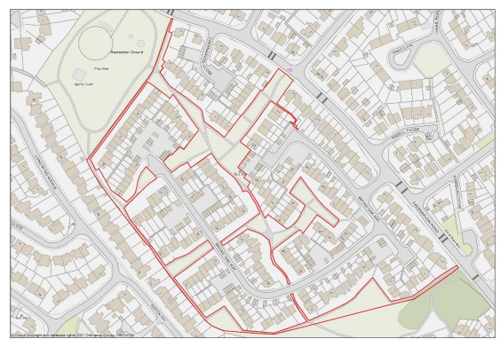
Notice under section 91 of the Localism Act 2011 - 26 April 2021: Entry of Broad Oak Way and Caernarvon Close green spaces and pathways into Cheltenham Borough Council's list of assets of community value

1. Background

In March 2022, Cheltenham Borough Council received a nomination form to list the green spaces and pathways in and around Broad Oak Way and Caernarvon Close as an asset of community value. The nomination was submitted by Up Hatherley Parish Council.

Under Section 87 of the Act the Council must maintain a list of assets of community value. Section 88 of the Act states:

(1) For the purposes of this Chapter but subject to regulations under subsection (3), a building or other land in a local authority’s area is land of community value if in the opinion of the authority—

(a) an actual current use of the building or other land that is not an ancillary use furthers the social wellbeing or social interests of the local community, and

(b) it is realistic to think that there can continue to be non-ancillary use of the building or other land which will further (whether or not in the same way) the social wellbeing or social interests of the local community.

(2) For the purposes of this Chapter but subject to regulations under subsection (3), a building or other land in a local authority’s area that is not land of community value as a result of subsection (1) is land of community value if in the opinion of the local authority—

(a) there is a time in the recent past when an actual use of the building or other land that was not an ancillary use furthered the social wellbeing or interests of the local community, and

(b) it is realistic to think that there is a time in the next five years when there could be non-ancillary use of the building or other land that would further (whether or not in the same way as before) the social wellbeing or social interests of the local community.

Under Section 89 of the Act, the Council can only enter assets into the list of Assets of Community Value in response to nomination from the community.

2. The Decision-Making Process

2.1 Decision-making in response to nominations for entry into the List of Assets of Community Value under the Localism Act 2011 is delegated to the Executive Director People and Change.

2.2 The internal review process in relation to listing shall be undertaken by the Executive Director of Finance and Assets, who was not involved in the initial decision.

2.3 The Executive Director People and Change has now fully considered the nomination in light of the Act and the Assets of Community Value (England) Regulations 2012 (“the Regulations”). Following this consideration, the Deputy Chief Executive decided to include the green spaces and pathways in and around Broad Oak Way and Caernarvon Close in its list of Assets of Community Value.

This decision has been taken because:

(1)

a) The Asset lies within the administrative boundaries of Cheltenham Borough Council

b) Up Hatherley Parish Council is entitled under 89(2)b)(i) of the Act to make a community nomination in respect of the Asset

c) The nomination from Up Hatherley Parish Council includes the matters required under Regulation 6 of the Regulations

(d) The Asset does not fall within a description of land which may not be listed as specified in Schedule 1 of the Regulations

(e) The letter of nomination from Up Hatherley Parish Council sets out the reasons for nominating the Asset, explaining why the nominator believes the Asset meets the definition in the Act and

(2) in the opinion of the Council,

(a) The current use of the Asset furthers the social well-being or cultural, recreational or sporting interests of the local community

(b) The use of the land or building currently, or in the recent past, furthers the social well-being or cultural, recreational or sporting interests of the local community.

(c) The use of the Asset will continue to further the social well-being or interests of the local community.

(d) The use of the building or land is not deemed ‘ancillary’, i.e. of secondary purpose.

This means that the use of the land or building to further social well-being or interests of the community is a principal use.

3. What Happens Next

The Asset will now be placed on the list of Assets of Community Value which the Council is required to maintain under Section 87 of the Act.

In accordance with Section 91 of the Localism Act, the Council will send this notice to:

  • The owner
  • The occupier of the land if not the owner,
  • The successful community nominator of the asset
  • Any other person(s) specified by the Regulations

The Council will also inform any freeholders and leaseholders of the asset who are not the owners, together with the parish council the land lies in (or partly lies in).

The information will also be published on the Council’s website. The Asset will remain on the Council’s List of Assets of Community Value for a period of five years from the date of this notice unless removed with effect from some earlier time in accordance with the provisions of the regulations.

The Localism Act 2011 requires that the Council draw particular attention to the following:

(a) the consequences for the land and its owner of the land’s inclusion in the list; and

(b) the right to ask for review.

The consequences for the land and its owner of the land Asset’s inclusion in the list

A local land charge under the Local Land Charges Act 1975 will be registered against the Asset to record that it has been included in the Council’s lists of Assets of Community Value.

Where the Asset is registered at the Land Registry, the Council is required under Schedule 4 of the Regulations to apply to the Land Registry for a restriction to be added to the registered title of the land that “no transfer or lease is to be registered without a certificate signed by a conveyancer that the transfer or lease did not contravene Section 95(1) of the Localism Act 2011”.

Under Section 95 of the Act an owner must notify the Council if they wish to enter into a relevant disposal (as defined in Section 96 of the Act) of the Asset. Owners should contact:

Richard Gibson
Head of Communities, wellbeing and partnerships
Cheltenham Borough Council
Municipal Offices 
Promenade
Cheltenham
GL50 1PP

Some types of disposal of listed assets are exempt and these are set out in full in Annex A of the document Community Right to Bid: Non-statutory advice note for local authorities.

Annex A also identifies circumstances where, although there is no requirement in the legislation that the owner has to explain to the Council that the disposal is exempt, it would be helpful for them to do so.

Once the Owner notifies the Council of an intended relevant disposal there is a six week period in which a Community Interest Group can ask to be treated as a potential bidder for the Asset. During this interim moratorium period the owner can only sell the Asset to a Community Interest Group.

If a Community Interest Group does make a written request to be treated as a bidder of the Asset there will be a six month moratorium during which the owner can only dispose of the Asset to a Community Interest Group.

The owner is advised to refer to Part 5 Chapter 3 of the Act and the Regulations in full and to seek legal advice if they wish to dispose of the asset. A disposal of listed land which contravenes the Regulations and Act will be ineffective.

After the moratorium period – either the 6 weeks if there has been no community interest, or the full 6 months – the owner is free to sell to whomever they choose and at whatever price, and no further moratorium will apply for the remainder of a protected period lasting 18 months (running from the same start date of when the owner notified the local authority of wishing to sell). The process and lengths of the moratorium periods are contained in section 95 of the Act.

The right to ask for review

Asset owners have the opportunity to request a review of the decision to include the Asset into the Council’s list of Assets of Community Value. Owners wishing to request a review of the decision should do so in writing to:

Executive Director of Finance and Assets
Cheltenham Borough Council
Municipal Offices
Promenade
Cheltenham
GL50 1PP

The written request must be made within 8 weeks from the date on the covering letter to this notice and must set out the grounds for review and whether an oral hearing is requested.

The review will normally take place within 8 weeks of the Council having received the written request for review. Private owners may claim compensation for loss and expense incurred through the asset being listed including a claim arising from a period of delay in entering into

a binding agreement to sell which is wholly caused by the interim or full moratorium period. Regulation 14 of the Regulations contains more detail on this. Part 5, Chapter 3 of the Localism Act 2011 and the Assets of Community Value (England) Regulations provide further detailed information.

If you have any queries about this letter please contact:

Richard Gibson
Head of Communities, wellbeing and partnerships
Cheltenham Borough Council
Municipal Offices
Promenade
Cheltenham
GL50 1PP

The land refers to the green spaces and pathways in and around Broad Oak Way and Caernarvon Close marked red on the plan


Land at Westdown Gardens - successfully nominated on 13 September 2021

Notice under Section 91 of the Localism Act 2011: Two pieces of land at Westdown Gardens, Cheltenham, Gloucestershire, GL52 6AX

On Thursday 9 September, Cheltenham Borough Council received a nomination form to list two pieces of land at Westdown Gardens as an asset of community value from Fairview Community Association (FCA).

In line with the Council’s agreed process, the nomination form, and supplementary information submitted by FCA, has been assessed by the Strategy and Engagement Manager who made an initial recommendation.

The initial recommendation, to list the two pieces of land as an Asset of Community Value, has been passed the Executive Director for People and Change, who has the authority to make the decision under the Constitution, part 3E.3 and Appendix A.

After reviewing both the nomination form, and the Strategy and Engagement Manager’s assessment form, the Executive Director for People and Change’s decision is that the two pieces of land at Westdown Gardens, should be listed as an Asset of Community Value.

In the opinion of the Executive Director for People and Change is that Fairview Community Association satisfies the criteria set out in Section 89 of the Localism Act 2011 and Regulations 4 and 5 of the Assets of Community Value (England) Regulations 2012 to act as nominator. The requirement that "Nominations can be accepted from any unincorporated group with membership of at least 21 local people who appear on the electoral roll within the local authority" has been met. FCA do not have a formal membership structure and instead have submitted a list of 34 names of people who have participated in Fairview Community Association (FCA) committees, events, or as volunteers and are included in FCA’s contact databases and that are on Cheltenham Borough Council’s electoral roll.

In addition, FCA can demonstrate a local connection to the asset being a community association for an area that includes the site, evidenced through their website and social media activities.

He is also satisfied that the two pieces of land referred to in the application meets the criteria set out under Section 88 of the Localism Act 2011 in that it furthers the social wellbeing and social interests of the local community. FCA has supplied evidence that the land is well used by local residents for a variety of informal activities and that these activities contribute to the wellbeing of the community.

There is evidence of this use has been ongoing for at least 5 years and there no reason to assume that this will not continue in the future if the land is available.

He is also satisfied that the two pieces of land do not fall within any of the exemptions set out in Schedule 1 of the Assets of Community Value (England) Regulations 2012.

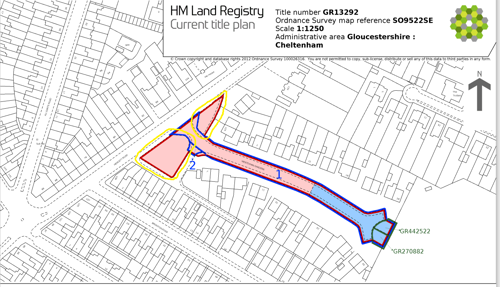
The Executive Director for People and Change will arrange for the two pieces of land marked yellow on the plan attached to this letter to be added to the Council’s List of Assets of Community Value.

The listing will also be published on the Council’s website. The Asset will remain on the Council’s List of Assets of Community Value for a period of five years from the date of this notice unless removed with effect from some earlier time in accordance with the provisions of the regulations.

The Localism Act 2011 requires that the Council draw particular attention to the following:

(a) the consequences for the land and its owner of the land’s inclusion in the list; and

(b) the right to ask for review.

The consequences for the land and its owner of the land Asset’s inclusion in the list

A local land charge under the Local Land Charges Act 1975 will be registered against the Asset to record that it has been included in the Council’s lists of Assets of Community Value.

Where the Asset is registered at the Land Registry, the Council is required under Schedule 4 of the Regulations to apply to the Land Registry for a restriction to be added to the registered title of the land that “no transfer or lease is to be registered without a certificate signed by a conveyancer that the transfer or lease did not contravene Section 95(1) of the Localism Act 2011”.

Under Section 95 of the Act an owner must notify the Council if they wish to enter into a relevant disposal (as defined in Section 96 of the Act) of the Asset. Owners should contact:

Strategy and Engagement Manager
Cheltenham Borough Council
Municipal Offices
Promenade
Cheltenham
GL50 1PP

Some types of disposal of listed assets are exempt and these are set out in full in Annex A of the document Community Right to Bid: Non-statutory advice note for local authorities.

Annex A also identifies circumstances where, although there is no requirement in the legislation that the owner has to explain to the Council that the disposal is exempt, it would be helpful for them to do so.

Once the Owner notifies the Council of an intended relevant disposal there is a six week period in which a Community Interest Group can ask to be treated as a potential bidder for the Asset. During this interim moratorium period the owner can only sell the Asset to a Community Interest Group.

If a Community Interest Group does make a written request to be treated as a bidder of the Asset there will be a six month moratorium during which the owner can only dispose of the Asset to a Community Interest Group.

The owner is advised to refer to Part 5 Chapter 3 of the Act and the Regulations in full and to seek legal advice if they wish to dispose of the asset. A disposal of listed land which contravenes the Regulations and Act will be ineffective.

After the moratorium period – either the 6 weeks if there has been no community interest, or the full 6 months – the owner is free to sell to whomever they choose and at whatever price, and no further moratorium will apply for the remainder of a protected period lasting 18 months (running from the same start date of when the owner notified the local authority of

wishing to sell). The process and lengths of the moratorium periods are contained in section 95 of the Act.

The right to ask for review

Asset owners have the opportunity to request a review of the decision to include the Asset into the Council’s list of Assets of Community Value. Owners wishing to request a review of the decision should do so in writing to:

Executive Director of Finance and Assets
Cheltenham Borough Council
Municipal Offices
Promenade
Cheltenham
GL50 1PP

The written request must be made within 8 weeks from the date on the covering letter to this notice and must set out the grounds for review and whether an oral hearing is requested.

The review will normally take place within 8 weeks of the Council having received the written request for review. Private owners may claim compensation for loss and expense incurred through the asset being listed including a claim arising from a period of delay in entering into a binding agreement to sell which is wholly caused by the interim or full moratorium period. Regulation 14 of the Regulations contains more detail on this. Part 5, Chapter 3 of the Localism Act 2011 and the Assets of Community Value (England) Regulations provide further detailed information.

The land refers to the two grass patches either side of the road marked in yellow at the end of the western end of Westdown Garden


Parklands Community Centre - succesfully nominated on on 26 April 2021

Notice under Section 91 of the Localism Act 2011 – 26 April 2021: Entry of Parklands Community Centre into Cheltenham Borough Council’s List of Assets of Community Value

1. Background

On 19 June 2020, Cheltenham Borough Council received a nomination under Section 89 of the Localism Act 2011 (“the Act”) to list Parklands Community Centre as an Asset of Community Value (“the Asset”). The nomination was made by Parklands Community Association.

Under Section 87 of the Act the Council must maintain a list of assets of community value. Section 88 of the Act states:

(1) For the purposes of this Chapter but subject to regulations under subsection (3), a building or other land in a local authority’s area is land of community value if in the opinion of the authority—

(a) an actual current use of the building or other land that is not an ancillary use furthers the social wellbeing or social interests of the local community, and

(b) it is realistic to think that there can continue to be non-ancillary use of the building or other land which will further (whether or not in the same way) the social wellbeing or social interests of the local community.

(2) For the purposes of this Chapter but subject to regulations under subsection (3), a building or other land in a local authority’s area that is not land of community value as a result of subsection (1) is land of community value if in the opinion of the local authority—

(a) there is a time in the recent past when an actual use of the building or other land that was not an ancillary use furthered the social wellbeing or interests of the local community, and

(b) it is realistic to think that there is a time in the next five years when there could be non-ancillary use of the building or other land that would further (whether or not in the same way as before) the social wellbeing or social interests of the local community.

Under Section 89 of the Act, the Council can only enter assets into the list of Assets of Community Value in response to nomination from the community.

2. The Decision-Making Process

2.1 Decision-making in response to nominations for entry into the List of Assets of Community Value under the Localism Act 2011 is delegated to the Executive Director People and Change.

2.2 The internal review process in relation to listing shall be undertaken by the Executive Director of Finance and Assets, who was not involved in the initial decision.

2.3 The Executive Director People and Change has now fully considered the nomination in light of the Act and the Assets of Community Value (England) Regulations 2012 (“the Regulations”). Following this consideration, the Deputy Chief Executive decided to include Parklands Community Centre in its list of Assets of Community Value.

This decision has been taken because:

(1)

a) The Asset lies within the administrative boundaries of Cheltenham Borough Council

b) The Parklands Community Association is entitled under 89(2)b)(i) of the Act to make a community nomination in respect of the Asset

c) The nomination from Parklands Community Association includes the matters required under Regulation 6 of the Regulations

(d) The Asset does not fall within a description of land which may not be listed as specified in Schedule 1 of the Regulations

(e) The letter of nomination from Parklands Community Association sets out the reasons for nominating the Asset, explaining why the nominator believes the Asset meets the definition in the Act and

(2) in the opinion of the Council,

(a) The current use of the Asset furthers the social well-being or cultural, recreational or sporting interests of the local community

(b) The use of the land or building currently, or in the recent past, furthers the social well-being or cultural, recreational or sporting interests of the local community.

(c) The use of the Asset will continue to further the social well-being or interests of the local community.

(d) The use of the building or land is not deemed ‘ancillary’, i.e. of secondary purpose.

This means that the use of the land or building to further social well-being or interests of the community is a principal use.

The detailed assessment upon on which this decision is based is set out in 4 below.

3. What Happens Next

The Asset will now be placed on the list of Assets of Community Value which the Council is required to maintain under Section 87 of the Act.

In accordance with Section 91 of the Localism Act, the Council will send this notice to:

  • The owner
  • The occupier of the land if not the owner
  • The successful community nominator of the asset.
  • Any other person(s) specified by the Regulations

The Council will also inform any freeholders and leaseholders of the asset who are not the owners, together with the parish council the land lies in (or partly lies in).

The information will also be published on the Council’s website. The Asset will remain on the Council’s List of Assets of Community Value for a period of five years from the date of this notice unless removed with effect from some earlier time in accordance with the provisions of the regulations.

The Localism Act 2011 requires that the Council draw particular attention to the following:

(a) the consequences for the land and its owner of the land’s inclusion in the list; and

(b) the right to ask for review.

The consequences for the land and its owner of the land Asset’s inclusion in the list

A local land charge under the Local Land Charges Act 1975 will be registered against the Asset to record that it has been included in the Council’s lists of Assets of Community Value.

Where the Asset is registered at the Land Registry, the Council is required under Schedule 4 of the Regulations to apply to the Land Registry for a restriction to be added to the registered title of the land that “no transfer or lease is to be registered without a certificate signed by a conveyancer that the transfer or lease did not contravene Section 95(1) of the Localism Act 2011”.

Under Section 95 of the Act an owner must notify the Council if they wish to enter into a relevant disposal (as defined in Section 96 of the Act) of the Asset. Owners should contact: Richard Gibson

Strategy and Engagement Manager
Cheltenham Borough Council
Municipal Offices 
Promenade
Cheltenham
GL50 1PP

Some types of disposal of listed assets are exempt and these are set out in full in Annex A of the document Community Right to Bid: Non-statutory advice note for local authorities.

Annex A also identifies circumstances where, although there is no requirement in the legislation that the owner has to explain to the Council that the disposal is exempt, it would be helpful for them to do so.

Once the Owner notifies the Council of an intended relevant disposal there is a six week period in which a Community Interest Group can ask to be treated as a potential bidder for the Asset. During this interim moratorium period the owner can only sell the Asset to a Community Interest Group.

If a Community Interest Group does make a written request to be treated as a bidder of the Asset there will be a six month moratorium during which the owner can only dispose of the Asset to a Community Interest Group.

The owner is advised to refer to Part 5 Chapter 3 of the Act and the Regulations in full and to seek legal advice if they wish to dispose of the asset. A disposal of listed land which contravenes the Regulations and Act will be ineffective.

After the moratorium period – either the 6 weeks if there has been no community interest, or the full 6 months – the owner is free to sell to whomever they choose and at whatever price, and no further moratorium will apply for the remainder of a protected period lasting 18 months (running from the same start date of when the owner notified the local authority of wishing to sell). The process and lengths of the moratorium periods are contained in section 95 of the Act.

The right to ask for review

Asset owners have the opportunity to request a review of the decision to include the Asset into the Council’s list of Assets of Community Value. Owners wishing to request a review of the decision should do so in writing to:

Executive Director of Finance and Assets
Cheltenham Borough Council
Municipal Offices
Promenade
Cheltenham
GL50 1PP

The written request must be made within 8 weeks from the date on the covering letter to this notice and must set out the grounds for review and whether an oral hearing is requested.

The review will normally take place within 8 weeks of the Council having received the written request for review. Private owners may claim compensation for loss and expense incurred through the asset being listed including a claim arising from a period of delay in entering into

a binding agreement to sell which is wholly caused by the interim or full moratorium period. Regulation 14 of the Regulations contains more detail on this. Part 5, Chapter 3 of the Localism Act 2011 and the Assets of Community Value (England) Regulations provide further detailed information.

If you have any queries about this letter please contact:

Strategy and Engagement Manager
Cheltenham Borough Council
Municipal Offices 
Promenade
Cheltenham
GL50 1PP

Assets removed from the list due to relevant disposal - last updated December 2018

  • Ryeworth Inn
  • Beaufort Arms
  • 83 Hewlett Road

List of non-successful nominations - last updated 6 August 2015

List of assets originally added 13 April 2016 and that have now been removed from the list due to the passing of the 5 year time-limit

St Paul's Tavern

List of assets originally added 24 March 2016 and that have now been removed from the list due to the passing of the 5 year time-limit

  • The Adam and Eve
  • The National Hunt
  • Old Restoration
  • The Royal Union
  • The Somerset
  • The Umbrella
  • The Wheatsheaf
  • The Plough
  • The Maple Leaf

List of assets originally added 6 August 2015 and that have now been removed from the list due to the passing of the 5 year time-limit

  • The Proscenium Building
  • Cheltenham Town Hall
  • The Wilson
  • Cheltenham Central Library
  • Everyman Theatre
  • Cheltenham Playhouse Theatre
  • Pittville Pump Room
  • Sandford Parks Lido
  • Springbank Community Resource Centre
  • Hesters Way Community Resource Centre
  • Asquith Road Allotments
  • Warden Hill Allotments
  • Alma Road Allotments
  • Hatherley Rd Allotments
  • Reddings Road Allotments
  • Severn Road Allotments
  • Leckhampton Allotments
  • Pilley Bridge Nature Reserve
  • Honeybourne Line Nature Reserve
  • Griffiths Avenue Nature Reserve
  • Naunton Park Community Rooms / Pavilion
  • Brizen Young People’s Centre / Pavilion
  • The Burrows CBC, Burrows Field Sports Pavilion
  • Kings Arms
  • Kemble Inn